


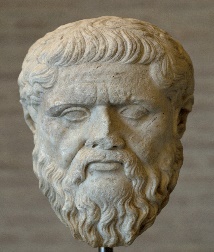
From Plato to Postmodernism: A History of Literary Theory
1 source·Aug 31, 2026
The provided text outlines a comprehensive history of literary theory, tracing its evolution from Classical antiquity to the postmodern era. The author employs a “great man, major work” approach to explore how fundamental questions regarding the purpose, source, and social function of art have shifted over time. Key debates begin with Plato, who criticized poetry for being an imitation of an imitation, and Aristotle, who defended it as a vital tool for achieving emotional catharsis and universal truth. The text further categorizes theoretical perspectives into mimetic, pragmatic, expressive, and objective frameworks, illustrating how critics evaluate the relationship between the poem, the universe, the audience, and the author. By examining the neoclassical rules of Horace and the sublime aesthetics of Longinus alongside modern movements like British Romanticism and Deconstruction, the source highlights the enduring necessity of defending literature against shifting philosophical and technological standards. Ultimately, the material suggests that studying these theories allows readers to become conscious of their own intellectual and ethical presuppositions when interpreting artistic works.
M.H. Abrams set forth a famous four-fold system in his book The Mirror and the Lamp to organize and define different theoretical approaches to literature. This framework categorizes theories based on how they view the relationship between the poem (the work of art) and its key coordinates: the universe, the audience, the poet, and the poem itself.
Here is an explanation of the four types of literary theory defined by Abrams:
1. Mimetic Theories
- Core Focus: The relationship between the poem and the universe.
- Key Characteristics: These are the oldest kind of theories, originating in classical antiquity with figures like Plato and Aristotle. The Greek word mimesis translates to “imitation,” and mimetic theories view the poem as a mirror of external realities, whether natural or supernatural.
- Theoretical Stance: All mimetic theorists agree that the best poetry comes closest to capturing the external reality it imitates. However, they famously struggle over whether this process brings us closer to truth or leads us farther away; for example, Plato believed mimesis takes us away from reality, while Aristotle argued it takes us closer. They primarily concern themselves with the ultimate meaning, essence, and nature of poetry—asking, “What is a poem?”
2. Pragmatic Theories
- Core Focus: The relationship between the poem and the audience.
- Key Characteristics: These theories shift the analytical focus to the impact the work has on its readers or listeners. Pragmatic theorists assess the social and educational functions of art, operating under the foundational belief that the dual purpose of art is to teach and to please.
- Theoretical Stance: A poem is judged to be good if it successfully teaches or pleases its audience. Pragmatic criticism establishes aesthetic rules to judge the poet’s craft, evaluate proper audience taste, and analyze how a work affects readers’ emotions—such as analyzing the psychological impact of tragic catharsis.
3. Expressive Theories
- Core Focus: The relationship between the poem and the poet.
- Key Characteristics: Primarily associated with Romanticism, expressive theories view poetry as a reflection of internal rather than external realities. Instead of mirroring the outside world, a poem is treated as self-expression, encapsulating the inner workings of the poet’s psyche.
- Theoretical Stance: Expressive theories focus heavily on the individual poet rather than their impact on society. The poet is viewed as a seer or prophet who communicates truth directly out of their soul. In this framework, the questions “What is a poet?” and “What is a poem?” become essentially synonymous and inseparable.
4. Objective Theories
- Core Focus: The relationship of the poem to itself.
- Key Characteristics: Popularized in the early 20th century by schools like the New Critics, objective theories “lop off” the other three coordinates. Instead of looking at the universe, the audience, or the author, they focus strictly on the internal relationships of the poem itself.
- Theoretical Stance: Objective theorists view the poem as a microcosm—a self-contained, self-referential little world. It is studied as an independent linguistic object apart from authorial intent or audience response.
- The five central questions that literary theory seeks to address are:
- What is the ultimate source of poetry? This question asks where poetry comes from—whether it is inspired by external forces like heaven, Plato’s forms, or nature, or if it is instead a form of internal self-expression arising from the poet’s own consciousness.
- Does poetry as a fiction draw us closer to or farther away from truth? This explores the debate between those who dismiss poetry as “all lies” that lead people astray, and those who argue that poetry actually conveys a higher, more profound kind of truth.
- Is the poet/artisan working a craft or a divinely inspired genius? This perennial debate looks at what is more important in the creation of poetry: “genius” (being born with a natural, inspired gift) or “art” (learned craft, skill, and training).
- Does poetry and the poet serve a useful function in society? As society becomes more technological and scientific, this question challenges whether poetry has any practical, pragmatic value, or if it is ultimately a waste of time.
- Is a poem a self-enclosed artifact whose meaning is eternal and transcendent, or a product of various social forces? This pits the traditional view of poetry—that it captures timeless, eternal truths “for all time”—against the modern/postmodern view that poetry is merely a temporal product of its specific socioeconomic and political milieu.